The hidden cost of content fragmentation in corporate travel
Sabre’s global research reveals how system sprawl and API overload are eroding efficiency in managed travel. Unified connections, disciplined architecture, and people-first AI are key to restoring efficiency and traveler confidence.
October 7, 2025
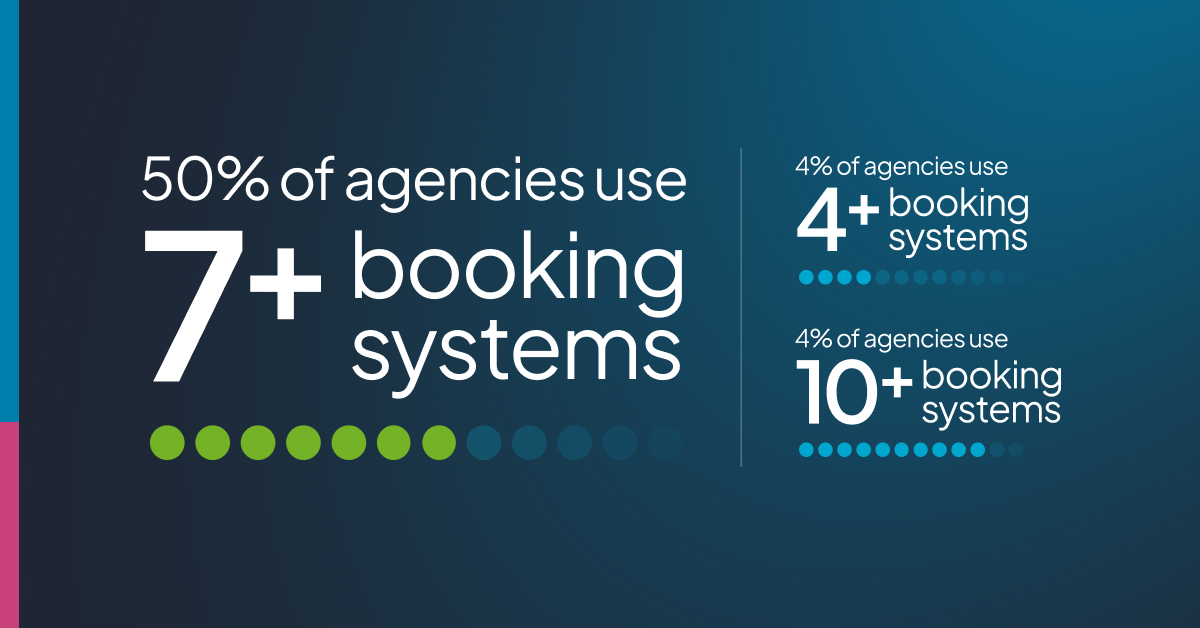
A recent global Sabre study reveals an industry overwhelmed by content fragmentation. With 91% of agencies operating four or more booking systems, the findings show why unified access, disciplined API strategy, and balanced AI use are becoming essential priorities for corporate travel leaders (Report, p. 5).
Seeing the big picture: Fragmentation and its fallout
Sabre recently surveyed agencies across 14 countries to understand how content fragmentation is reshaping travel operations (Report, p. 30). The report’s central metaphor—a photographer isolating a clear subject in a cluttered frame—captures the challenge travel programs now face: abundance without focus.
Operational sprawl is everywhere. In fact, 91% of agencies operate with 4 or more booking systems, half use 7 or more, and more than 10% manage 10 or more—a level of complexity unimaginable a decade ago (Report, p. 5). One industry leader summarized the strain: “Content fragmentation has stretched our resources, with agents spending 20% more time navigating systems” (Report, p. 7).
In fact, more than 70% of agencies have added systems in the past 3 years, led by large agencies (74–79%) and those in APAC (77%) (Report, p. 6). Even as agencies expand access, they deepen operational sprawl.
Gonzalo Martinez Angello, COO at Furlong Fox, captured the risk succinctly: “Our clients expect a seamless experience. Fragmentation threatens that expectation—it can lead to missing content, inconsistent information, and, ultimately, a loss of trust” (Report, p. 9).
What fragmentation breaks: Costs, consistency, and confidence
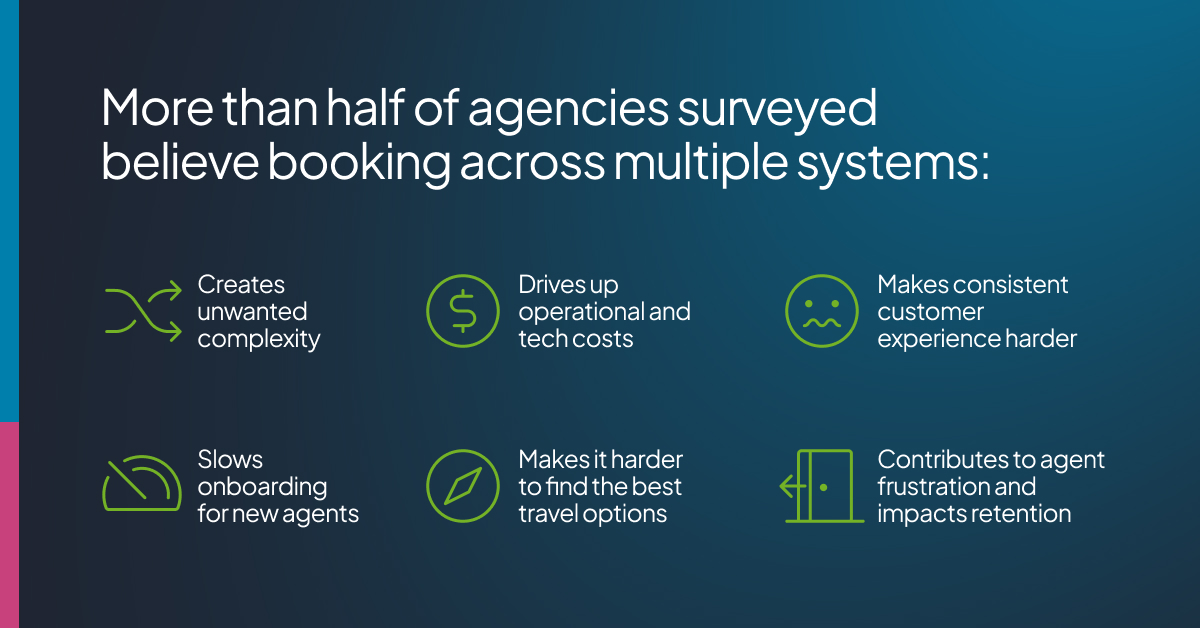
Sabre’s findings confirm what many travel leaders already sense: fragmentation not only increases complexity but drives cost and inconsistency. More than half of surveyed agencies report that booking across multiple systems drives up operational and technology costs, slows onboarding, and complicates customer experience (Report, p. 11).
Smaller agencies are hit hardest. Seventy-one percent cite unwanted complexity, compared to 60% of mid-sized and 44% of large agencies (Report, p. 12). The strain cascades into staffing, morale, and service quality.
Tatang Tabrani, managing director at Global Travel, added that “integrating data seamlessly across disparate systems has become increasingly complex—adding to consultants’ workloads and increasing the potential for inefficiencies” (Report, p. 13).
The connectivity layer: API sprawl and integration fatigue
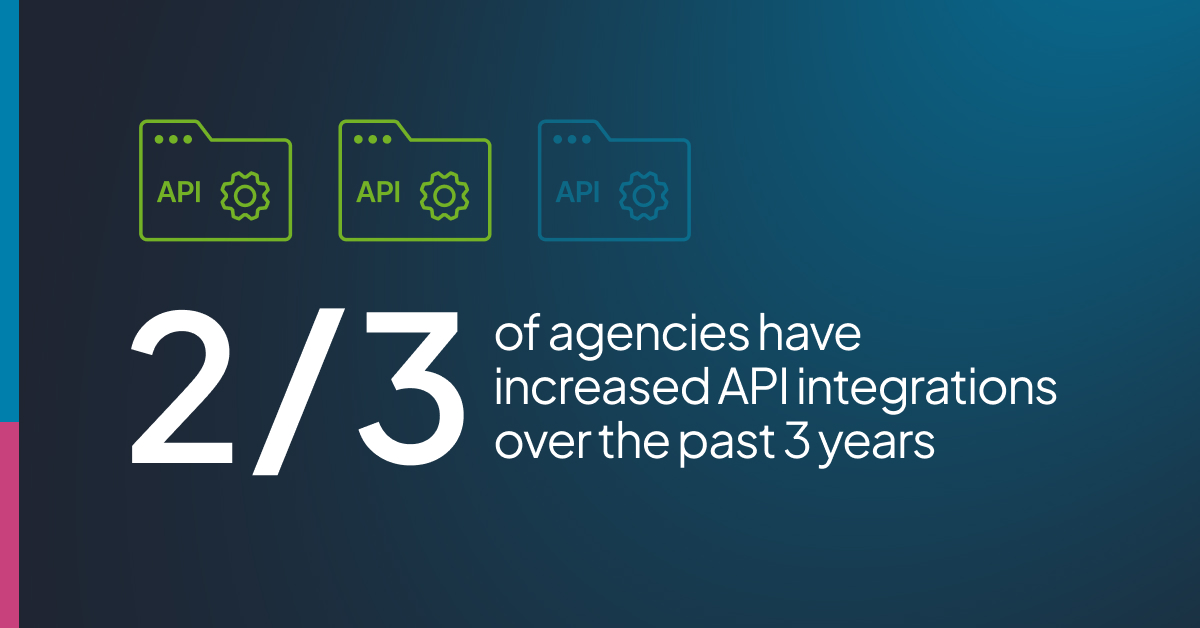
Beneath the surface lies a growing technical problem: API overload. Nearly 90% of agencies now manage 4 or more API integrations, and two-thirds have increased their API count in the past 3 years (Report, p. 14). Over half call the situation a “burden.”
APAC agencies report the heaviest load, often managing 10 or more APIs, while the Americas cluster around 4 to 6 (Report, p. 14).
“The current fragmentation of the technological ecosystem, with multiple APIs and platforms, poses an operational challenge that can shift our focus away from our core mission: guiding and supporting the client in every travel decision,” said Jose Smith, manager at Continental Travel (Report, p. 15).
AI as a viewfinder: Powerful, if chosen wisely
Artificial intelligence is emerging as the industry’s lens for focus.
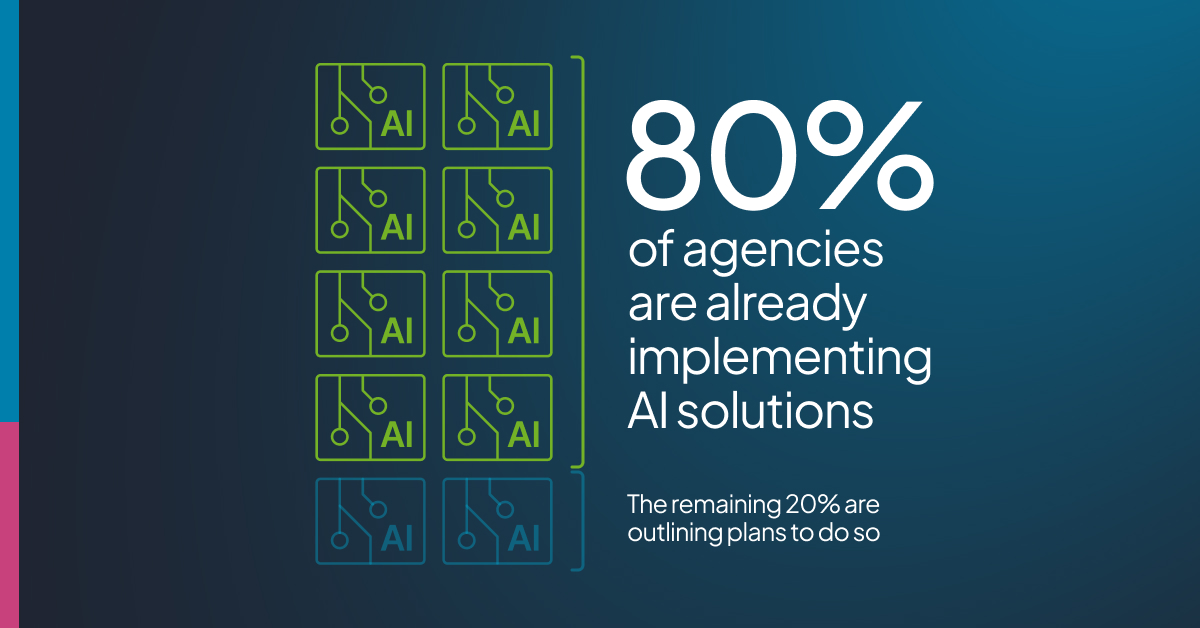
“AI is becoming foundational, with nearly 80% of agencies already implementing AI solutions, and the remaining 20% outlining plans to do so,” the report noted (Report, p. 17). More than 91% of leaders believe AI will enhance both agent efficiency and customer experience, and nearly 40% already see measurable productivity gains (Report, p. 17).
That approach reflects a broader trend across the industry, with survey respondents sharing similar optimism. A U.S.-based TMC reported, “Content fragmentation complicates audience engagement, but AI can unify data for personalized experiences” (Report, p. 18). Another, from New Zealand, added, “By analyzing customer data, we can provide more personalized rewards programs and enhance customer stickiness” (Report, p. 19).
But the enthusiasm is tempered by caution.
“Not all AI is created equal. . . . It helps organize, but it can add noise and confusion if poorly implemented,” warned the Sabre (Report, p. 20).
Forty-one percent of agencies express concern about AI’s impact on jobs, while others remain confident it will augment rather than replace human roles (Report, p. 23).
The unifying move: fewer systems, not fewer sources
In its final section, the Sabre study highlights a shared vision: unified access via a single connection. More than 80% of agencies say such access would reduce technology costs—proof that simplification has become a strategic imperative (Report, p. 25).
Renaud Marrache, deputy managing director at Group FRAM Karavel, observed that “the key lies in integrating tools that centralize and structure content sources” (Report, p. 26).
Gonzalo Martinez Angello of Furlong Fox added, “The ideal way forward is a more unified, open, and connected ecosystem—where content flows seamlessly, regardless of its source” (Report, p. 27).
The report concludes that agencies “favor simplified access to a broad array of options—not fewer content sources, but fewer systems and integrations” (Report, p. 28).
What this means for corporate travel leaders
Fragmentation touches every corner of a managed travel program from policy enforcement to traveler experience. The following areas illustrate where simplification and unified access can have the greatest impact:
Policy and governance
Fragmented systems obscure visibility and complicate compliance. Consolidating through unified access helps restore control over sourcing, traveler data, and duty of care (Report, p. 25).
Supplier and distribution strategy
Partnerships now hinge on integration quality. Programs should evaluate suppliers not only by rate competitiveness but by connectivity maturity, meaning how cleanly they plug into a unified ecosystem (Report, pp. 25–28).
Technology and cost efficiency
Agencies link simplification directly to lower tech costs. Corporate buyers can mirror this logic by auditing their system stack and retiring redundant tools (Report, p. 25).
Traveler experience
As the report warns, fragmentation undermines consistency and trust (Report, p. 9). Unified systems allow faster servicing, more reliable content, and greater confidence for travelers in motion.
A practical checklist for the next 90 days
To help travel leaders translate these findings into action, the following checklist outlines practical steps to begin reducing fragmentation and building a more unified technology ecosystem:
Map your stack. List every booking system and API your program touches. Note purpose, overlap, and maintenance effort (Report, pp. 5, 14).
Target consolidation wins. Identify redundant systems you can replace with a single connection to cut cost and failure points (Report, p. 25).
Score partners on unification fit. Evaluate whether each supplier can deliver content through centralized access (Report, p. 26).
Pilot AI where friction is highest. Focus on use cases that clearly enhance agent productivity (Report, pp. 17, 20).
Re-baseline onboarding. Track onboarding times post-consolidation to confirm measurable improvement (Report, p. 11).
Communicate traveler benefits. Reinforce how simplification leads to faster response times and better transparency (Report, pp. 9, 28).
More than 91% of agencies use 4 or more booking systems, and 50% use 7 or more (Report, p. 5).
What impact does fragmentation have on agencies?
It increases complexity, raises tech costs, slows onboarding, and undermines customer experience (Report, p. 11).
How is AI being used to manage complexity?
Nearly 80% of agencies use AI to boost efficiency and experience, though not all implementations reduce noise (Report, pp. 17, 20).
How do agencies view unified access?
More than 80% say a single connection would cut tech costs, showing that simplification is a strategic priority (Report, p. 25).
What’s the long-term goal for travel programs?
Simplified access to broad content—fewer systems, fewer integrations, and smarter connectivity (Report, p. 28).
What is the relationship between Sabre and Christopherson?
Christopherson has entered a multi-year strategic alliance with Sabre, designating Sabre as its primary distribution technology partner. Through this partnership, Sabre’s cloud-native platform, extensive content marketplace (including NDC channels), and AI-driven automation are integrated into Christopherson’s proprietary travel-management platform, Andavo.
The collaboration enables Christopherson to leverage Sabre’s modular solutions—such as Sabre Red 360, Sabre APIs, Trip Proposal, Automated Exchanges & Refunds and Market Intelligence—to simplify operations, enrich content access, and enhance service delivery across its business travel programs.
Let’s chat
Connect with our team of experienced travel experts to learn how Christopherson can help your business travel with ease.