5 reasons corporate hotel programs fall short—and how to fix them
Christopherson’s 2025 hotel program survey shows corporate travel spend has rebounded, yet most hotel programs still rely on outdated, manual processes that limit visibility, efficiency, and savings. Here are five key findings that highlight the need for modernization and an overview of our end-to-end solution.
December 2, 2025
Corporate travel is back. But for many organizations, the systems supporting hotel programs haven’t kept pace.
Christopherson’s 2025 hotel program survey—conducted across 109 U.S. companies—reveals an industry at a crossroads: hotel spend has recovered to pre-pandemic levels, yet visibility, automation, and confidence have not. The result is a hotel category that consumes significant administrative effort but often leaves measurable savings unrealized.
Our research shines light on the biggest challenges facing travel and procurement teams today and points toward a smarter, data-driven model for tomorrow.
1. Manual work is draining strategic capacity
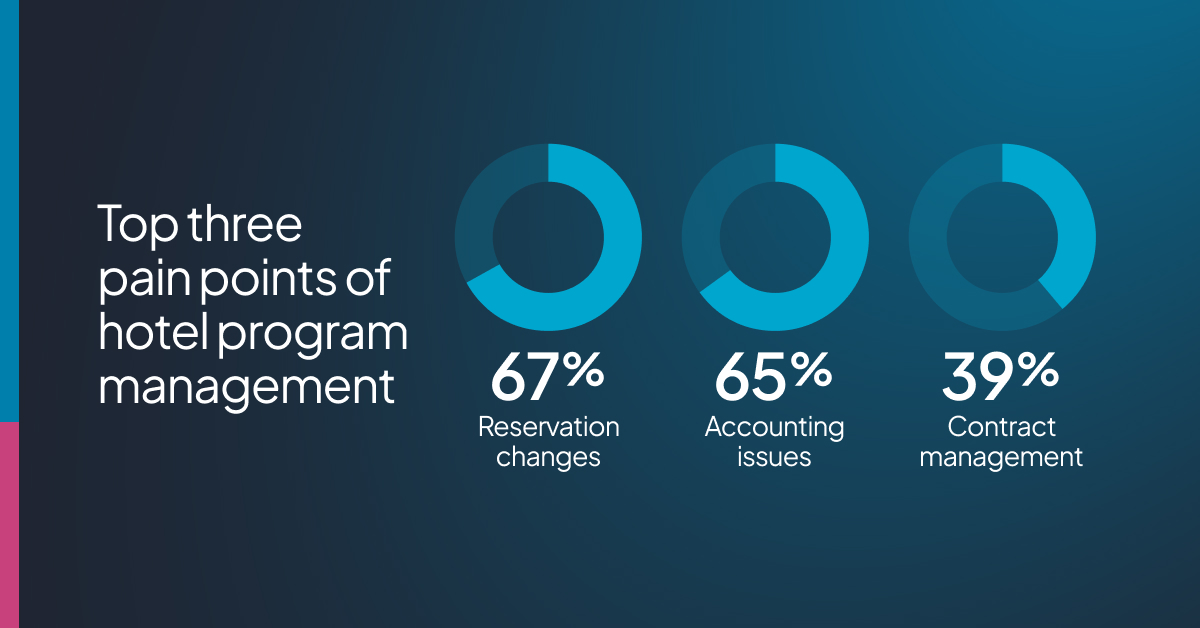
When asked to name their top frustrations, 67% of travel managers pointed to managing reservation changes, followed by 65% citing accounting issues and 39% citing contract management. In many organizations, hotel management has become a cycle of chasing missing rates, reconciling invoices, and extending contracts—leaving little room for strategy.
Leaner post-pandemic teams are now handling sourcing, policy, and reconciliation with fewer resources. Manual processes and spreadsheets dominate, turning travel programs into reactive rather than proactive operations.
And time isn't the only cost. Manual work conceals opportunities, obscures savings, and erodes confidence in negotiated value.
Automation paired with expert support changes that equation. When routine rate checks, audits, and booking validations run automatically—and specialists manage supplier relationships—travel teams reclaim time to focus on performance and strategy.
2. Execution gaps erode negotiated value
Even when sourcing strategies are sound, the follow-through often falters.
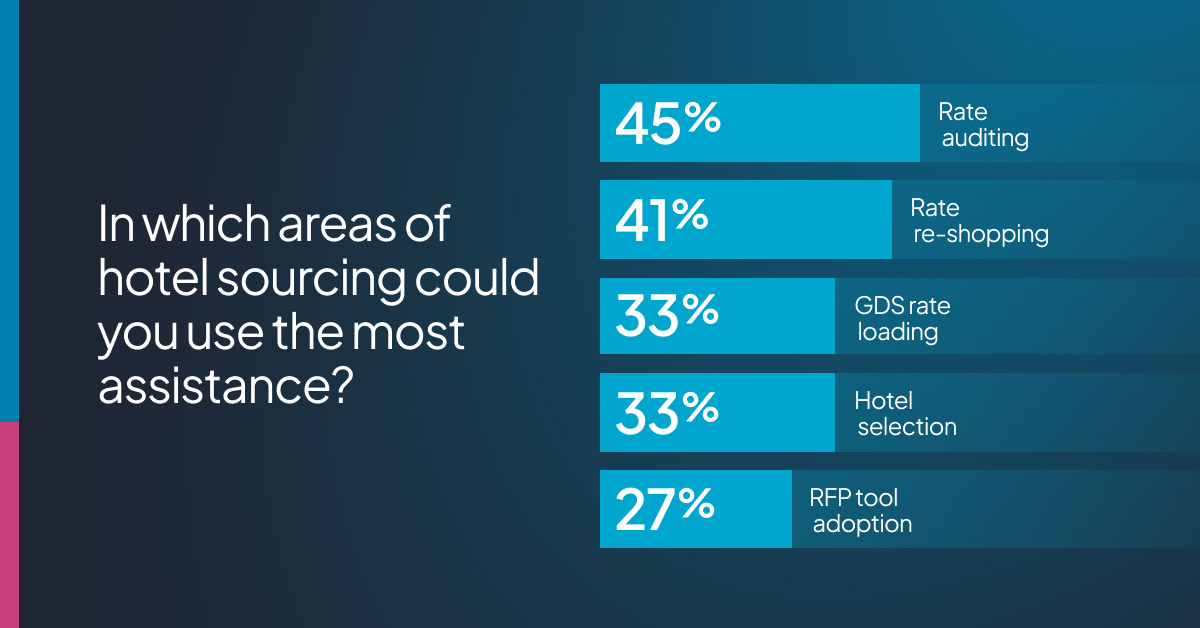
Our survey found that 45% of respondents need help with rate auditing and 41% with rate re-shopping, while another third struggle with GDS rate loading and hotel selection. Without consistent auditing, negotiated rates can quietly lose visibility in booking tools, forcing travelers to book public rates and nullifying negotiated savings.
Savings aren’t secured when contracts are signed—they’re earned through continuous validation. Rate-loading accuracy, audit frequency, and re-shopping technology ensure that the rates companies secure are the ones travelers actually use.
3. Contracts are signed—then forgotten
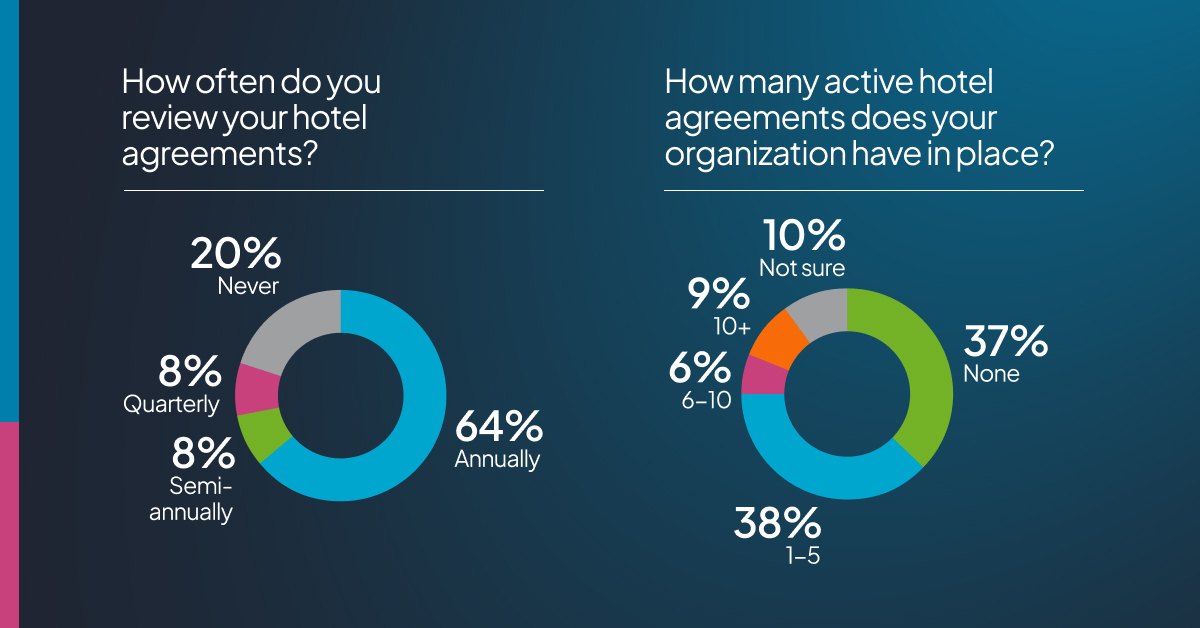
Perhaps the most surprising statistic from the survey: 37% of companies have no active hotel agreements at all, and 20% never review the ones they do have.
That means many organizations operate entirely on unmanaged or market rates, surrendering both savings and leverage from the outset.
Even among those with negotiated contracts, few have reliable visibility into expirations or rate accuracy. Without centralized tools, agreements expire unnoticed, rates drift above market value, and travelers default to whatever appears first in the booking tool.
Regular contract reviews, quarterly audits, and centralized documentation transform this picture. By making contract management a continuous process instead of an annual scramble, companies preserve savings, ensure compliance, and strengthen their negotiating position year after year.
4. Data gaps are weakening negotiation confidence
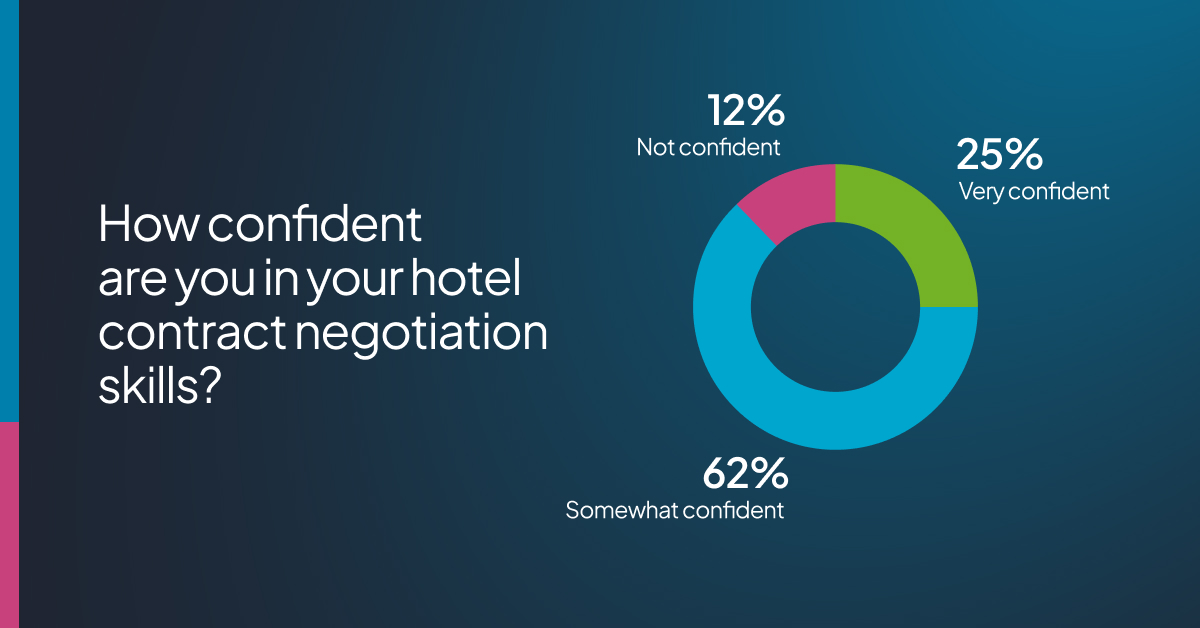
Eighty-two percent of travel managers participate in hotel sourcing, but only 25% describe themselves as “very confident” negotiators. The issue isn’t necessarily a lack of experience as much as it is a lack of evidence.
Without benchmarking tools or market insight, buyers often negotiate on trust and historical data, while hotels negotiate with dynamic pricing models and robust analytics.
When teams track negotiated-rate utilization and benchmark against market averages, they gain visibility into performance and proof of value. Negotiations shift from assumption to evidence, producing better outcomes and stronger credibility with leadership.
5. Outdated technology is slowing hotel sourcing
Across all categories of business travel, automation is rising—except in hotel sourcing.
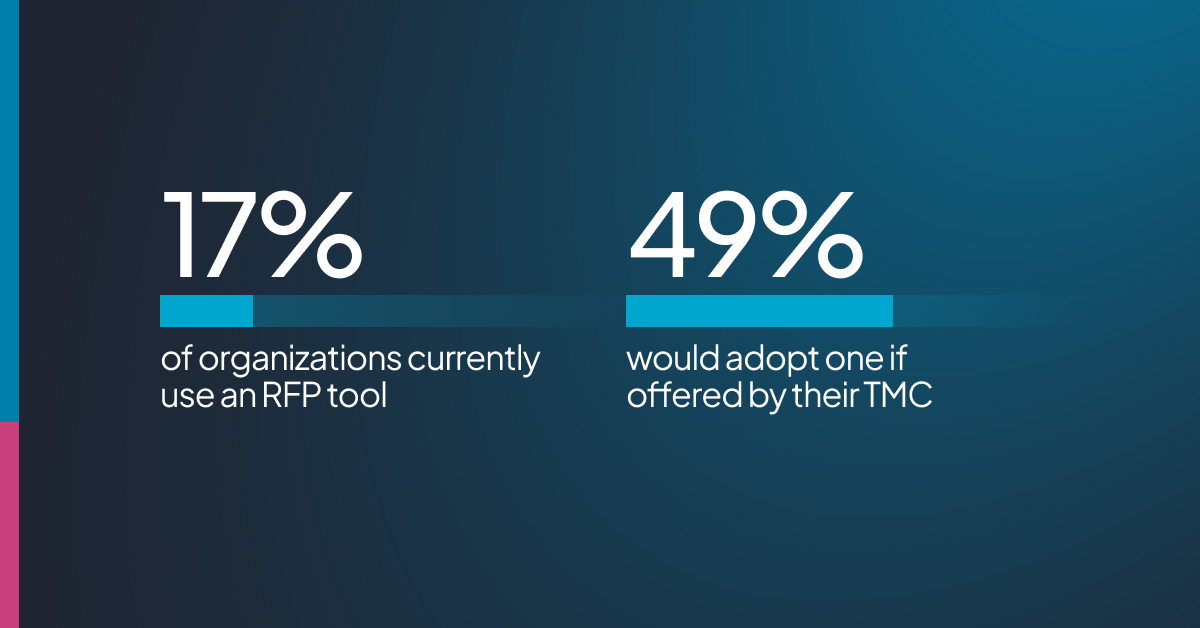
Only 17% of survey respondents currently use a dedicated RFP management tool, while nearly half said they’d adopt one if offered by their travel management company. The reliance on spreadsheets and email negotiations creates delays, errors, and fragmented reporting.
Purpose-built tools solve half the problem; expert guidance solves the rest. When technology and supplier relations specialists work in tandem, organizations gain an auditable, data-driven process that delivers faster cycle times, clearer visibility, and measurable results.
A blueprint for smarter hotel programs
Christopherson’s end-to-end hotel program solution addresses the very issues exposed in our survey, bridging the divide between policy, data, and performance. Designed as a comprehensive service that addresses the most challenging parts of the hotel RFP process, we combine the advanced RFP technology of BTP Automation with our expert supplier relations team to ensure that tailored hotel programs are effectively managed while maximizing savings and strengthening partnerships..
Discover and source
Christopherson aggregates multiple rate types—GDS content, client-negotiated rates, consortia discounts, and proprietary Andavo rates—to deliver comprehensive market visibility and coverage where travelers actually stay.
Negotiate and audit
BTP's automated RFP platform combines with hands-on supplier relations expertise to create meaningful, auditable contracts. Monthly rate audits verify that negotiated rates are loaded correctly and remain active.
Load, book, and support
Preferred rates are distributed across booking tools and advisor systems to minimize errors and improve traveler compliance.
Capture and optimize
Integrations with expense tools uncover off-channel bookings and deliver full duty-of-care visibility. Rate-assurance technology automatically rebooks when better rates appear, capturing incremental savings.
Measure and improve
Dashboards and performance reporting connect spend data to rate outcomes, giving travel managers defensible, evidence-based insights to inform future negotiations.
This continuous sourcing-to-measurement cycle transforms hotel programs from reactive to proactive, turning data into leverage and process into proof.
The wake-up call for travel leaders
Our survey makes one thing clear: while most organizations recognize their pain points, few have built the infrastructure to solve them.
Hotel programs that modernize with automation, connected data, and expert oversight achieve measurable results—saving time, strengthening supplier relationships, and delivering verified ROI.
In our experience, companies that adopt this approach often reclaim hundreds of administrative hours per year and realize incremental savings through rate assurance, automation, and continuous audit cycles.
As business travel evolves, the advantage belongs to those who treat their hotel program as a living, managed system rather than a collection of contracts. It’s time to wake up to what’s possible when data, technology, and human expertise work together.
Ready to modernize your hotel program?
Contact us to schedule a free consultation and discover how connected hotel management can deliver measurable savings, greater visibility, and a better traveler experience.