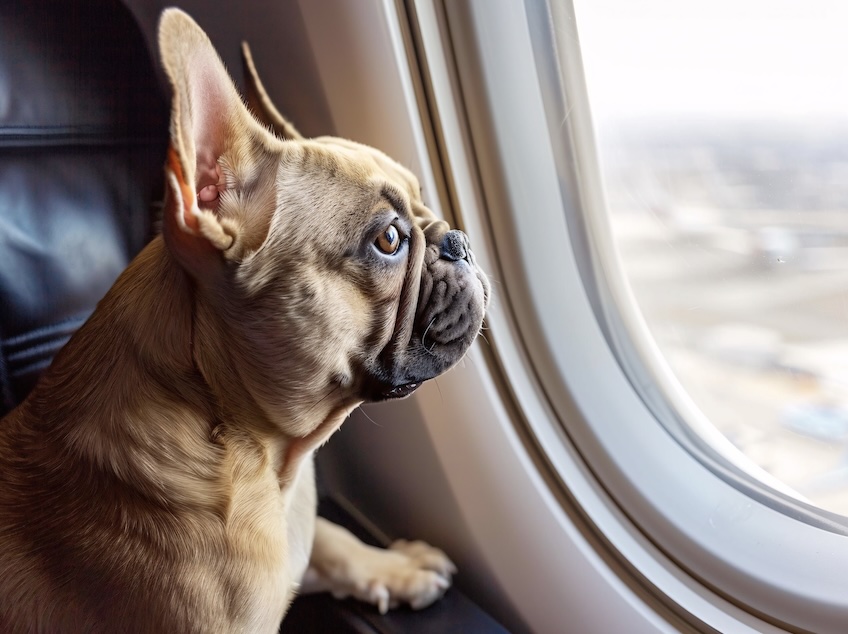
Business travel with pets is becoming more common as longer assignments, hybrid work, and blended “bleisure” trips reshape how—and how long—people travel.
The shift isn’t just anecdotal. Airlines now transport millions of animals each year, with estimates exceeding 4 million annually worldwide, and demand continuing to grow as more travelers choose to bring pets along rather than leave them behind.
At the same time, policies remain highly inconsistent. While global standards like the IATA Live Animals Regulations exist, airlines and countries still apply their own requirements, creating a fragmented experience for travelers.
“Before COVID-19, business travel with pets wasn’t something we talked about much,” said Carol Del Giudice, a Christopherson account executive. “Now it comes up more often, especially for extended stays and project-based travel.”
Whether you’re a frequent business traveler or a travel manager supporting employees on the road, here are 12 essential tips to navigate pet-inclusive travel successfully.
1. Always check airline pet policies. They’re not standardized.
No two airlines handle pet travel the same. Rules vary by carrier, aircraft, route, and cabin configuration.
Key differences include:
- Size and weight limits (including carrier)
- In-cabin vs. cargo eligibility
- Breed and age restrictions
- Documentation timing (e.g., health certificates within specific windows)
- Carrier dimensions and material requirements
Even with global guidelines, airlines maintain their own rules, which can change frequently.
“Something as simple as the wrong carrier size or missing paperwork can derail the entire trip,” Del Giudice explained.
Key takeaway: Verify pet policies for every segment, including codeshare flights, and reconfirm within 24–48 hours of departure.
2. Book early. There are limits on pets per flight.
Most airlines cap in-cabin pets per flight, often allowing only a few animals.
Pet space is typically:
- Requested separately from the ticket
That means a confirmed seat does not guarantee a spot for your pet.
“A traveler may have the perfect itinerary, but if pet space isn’t secured at booking, they may need to rebook entirely,” Del Giudice noted.
In most cases, travelers will need to work directly with the airline to add a pet to their reservation, as this is not something travel advisors typically handle. This step often requires direct confirmation with the carrier and cannot always be completed through standard booking channels.
Key takeaway: Confirm pet availability at the time of booking and identify a backup flight if your schedule is fixed.
3. Understand the cost, and who pays.
Pet travel adds costs that can escalate quickly:
- Airline fees (typically $100–$150 each way)
- Hotel pet fees or deposits
- Ground transportation adjustments
Airlines alone generated significant revenue from pet fees in recent years, reflecting both demand and cost impact. In most corporate travel programs, these costs are not reimbursable, though exceptions may exist for relocations or long-term assignments.
Key takeaway: Review your travel policy in advance and budget separately for pet-related expenses.
4. Choose direct flights whenever possible.
Each connection introduces additional risk—temperature changes, handling, delays, and unfamiliar environments.
For cargo travel, multiple transfers increase exposure to operational errors. Even in-cabin, longer travel days can increase stress.
While air travel is generally safe—with incident rates extremely low relative to volume— reducing touchpoints remains best practice.
“A direct flight reduces the number of points where something can go wrong,” Del Giudice explained.
If connections are unavoidable, it’s important to evaluate the airport itself—not just the flight. Some airports offer designated pet relief areas inside security, while others may require exiting the terminal, which can be difficult during short layovers.
Travelers can review airport amenities, including pet relief locations, through resources like the TSA’s airport information pages or individual airport websites.
Key takeaway: Prioritize nonstop flights. If connections are unavoidable, allow longer layovers and confirm handling procedures.
5. Prepare documentation and requirements early.
Pet travel often requires:
- Destination-specific permits
Requirements vary by country and airline, and many must be completed within strict time windows.
In fact, the majority of international pet travel requires formal health documentation, with compliance critical to avoid delays or denied boarding.
Key takeaway: Start documentation early and verify timing requirements for both departure and return travel.
6. Don’t assume every “pet-friendly” hotel is the same.
“Pet-friendly” can mean very different things depending on the property.
Always confirm:
- Size or breed restrictions
- Room limitations (designated floors or areas)
Additional constraints may include:
- Restrictions on leaving pets unattended
- Required waivers at check-in
- Limited access to outdoor areas
Key takeaway: Contact the hotel directly to confirm policies before arrival.
7. Plan ground transportation ahead of time.
Ground transportation policies are inconsistent and often overlooked.
Potential issues include:
- Rideshare drivers declining pets
- Taxi or shuttle restrictions
These gaps often surface at arrival, when timing matters most.
“Many professionals plan the flight but don’t always think about how they’ll get to the hotel,” Del Giudice noted.
Key takeaway: Pre-arrange pet-friendly transport and confirm policies in advance.
8. Recognize the key difference: Business vs. leisure travel.
Traveling with pets on business trips is fundamentally different from leisure travel.
- Leisure travelers can plan around their pets
- Business travelers must fit pets into fixed schedules
That difference shows up in several practical ways:
- Limited flexibility to choose pet-friendly flight times or routes
- Less ability to adjust travel dates if pet space isn’t available
- Greater pressure to stay within company policy and preferred suppliers
- Tighter itineraries that leave less time for pet care between meetings
“A leisure traveler might choose a different flight time, airport, or even airline to meet pet requirements—like staying within in-cabin size limits or avoiding cargo,” said Del Giudice. “Business travelers are usually working within fixed schedules and policy constraints, so they have far less flexibility to optimize for the pet.”
As a result, decisions about bringing a pet often come down to tradeoffs between convenience, compliance, cost, and animal comfort.
Key takeaway: Evaluate whether your itinerary allows enough flexibility before deciding to bring a pet.
9. Factor in time sensitivity and trip structure.
Business trips often include:
These factors can make pet care significantly more complex, particularly when moving between locations or spending long stretches away from the hotel.
Common challenges include:
- Limited time for walks, feeding, and breaks between meetings
- Difficulty managing pets during full-day conferences or offsite events
- Added coordination when changing cities or hotels mid-trip
“An itinerary that works for a solo traveler doesn’t always translate when a pet is involved,” Del Giudice noted. “Back-to-back meetings or same-day travel can leave very little margin for pet care.”
This becomes even more difficult without support at the destination, such as pet-sitting services, nearby green spaces, or flexible accommodations.
Key takeaway: Map out how you’ll care for your pet each day before confirming travel.
10. Evaluate whether the trip is right for your pet.
Not every trip is suitable.
Consider:
- Your pet’s health and temperament
Some conditions increase risk:
- Long-haul or multi-leg trips
Pets can experience significant stress during travel, particularly in unfamiliar or high-pressure conditions .
“Sometimes the best advice is not to bring the pet,” Del Giudice cautioned.
Key takeaway: Evaluate the trip from your pet’s perspective—not just your own schedule.
11. Align with corporate travel policy and duty of care.
For travel managers, pet travel introduces additional planning requirements that aren’t always addressed in standard policies.
Key considerations include:
- Policy clarity (whether pet travel is permitted, restricted, or not addressed at all)
- Liability and disruption risks if a pet-related issue impacts the trip
- Supplier compliance, especially when travelers deviate from preferred vendors to accommodate pets
In practice, gaps in policy can lead to inconsistent decisions—such as whether pet fees are reimbursable, how exceptions are handled for extended stays, or what happens if travel is disrupted due to pet-related issues.
“Without clear guidance, travelers may make assumptions that don’t align with the program,” Del Giudice explained. “That can create friction for both the traveler and the organization.”
Global aviation guidance also highlights how inconsistent pet policies across airlines and regions make standardization difficult, reinforcing the need for internal clarity.
For organizations, the goal isn’t necessarily to accommodate every pet request, but to define expectations and reduce ambiguity.
Key takeaway: Establish clear guidelines around pet travel including cost responsibility, supplier requirements, and exception scenarios to ensure consistency across your program.
12. Work with a travel partner who understands the complexity.
Bringing a pet into a business trip adds layers of coordination across air, hotel, and ground—especially in a managed travel environment where policy, timing, and supplier constraints all intersect.
Although it’s possible to plan independently, gaps often show up when details don’t align across the full itinerary. And while travelers typically need to coordinate pet reservations directly with airlines, a knowledgeable travel partner can still play a critical role in the broader planning process.
Working with an experienced travel management company can help:
- Navigate airline policy differences, including carrier-specific restrictions and documentation timing
- Identify genuinely pet-friendly suppliers—not just those labeled as such
- Ensure compliance with company guidelines while accommodating traveler needs
- Coordinate end-to-end logistics so flights, hotels, and ground transportation all support the pet
“A lot of the complexity comes from how these pieces connect,” said Del Giudice. “It’s about making sure every part of the trip works together for both the traveler and the pet.”
For business travelers on tight schedules, this coordination can reduce last-minute changes, avoid policy conflicts, and minimize disruption.
Key takeaway: Involve your travel partner early so pet requirements are built into the itinerary from the start.
Conclusion: Plan ahead, stay flexible, and know the tradeoffs.
Bringing pets into business travel adds a new layer of coordination, requiring more deliberate planning than a typical trip.
Success depends on preparation:
- Understanding supplier requirements
- Planning the full journey
- Aligning with company policy
With the right approach, travelers can reduce disruption, manage costs, and create a more manageable experience for both themselves and their pets—while staying within the realities of structured business travel.
► You’ll also like: The do’s and don’ts of bringing family on a business trip