10 corporate travel policy trends travel managers need to know
Corporate travel policies are evolving as organizations face rising travel costs, compliance challenges, and new traveler expectations. A recent GBTA study reveals key trends shaping corporate travel programs in the United States and Canada.
May 13, 2026
Corporate travel policies rarely make headlines, but they quietly control how billions of dollars in business travel are spent each year.
And right now, those policies are changing.
The State of Corporate Travel Policies, a new study from the Global Business Travel Association (GBTA), shows that many organizations across the United States and Canada are tightening their corporate travel rules while trying to balance cost control, traveler experience, and duty-of-care responsibilities. The findings suggest that after years of disruption—from the pandemic to rising travel prices—companies are reevaluating the policies that guide how employees travel for work.
“Before the pandemic, many organizations were experimenting with more flexibility,” said Carol Del Giudice, an account executive at Christopherson. “Now the focus is on finding the right balance between traveler experience, cost control, and visibility into travel activity.”
The GBTA research highlights ten key trends that travel managers should consider when reviewing their corporate travel policies and managed travel programs.
1. Corporate travel policies are becoming stricter
For years, industry discussions centered on making corporate travel policies more flexible. But the latest research suggests the pendulum has swung back toward greater control.
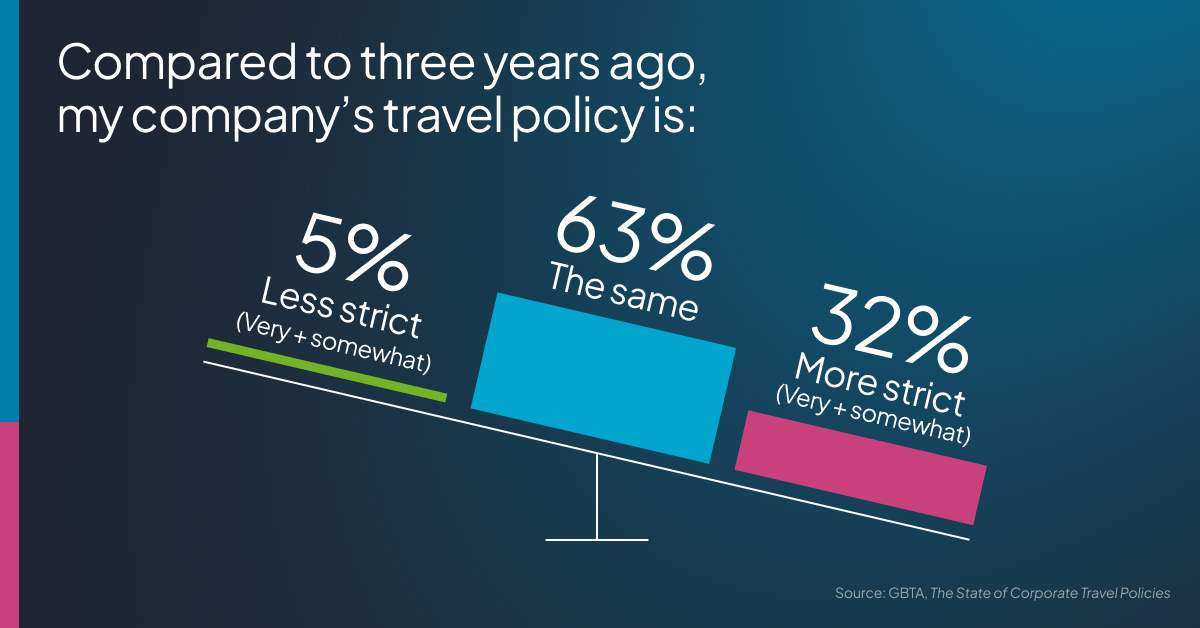
Nearly one-third of travel managers (32%) say their company’s policy is stricter today than it was three years ago. Only 5% say policies have become more lenient.
Rising travel costs and increased scrutiny around travel spend are major factors behind this shift.
“Leadership teams want clearer visibility into why employees are traveling and what those trips accomplish,” Del Giudice explained. “Policies are becoming more structured so companies can manage spend while still supporting essential travel.”
2. Long policies can reduce compliance
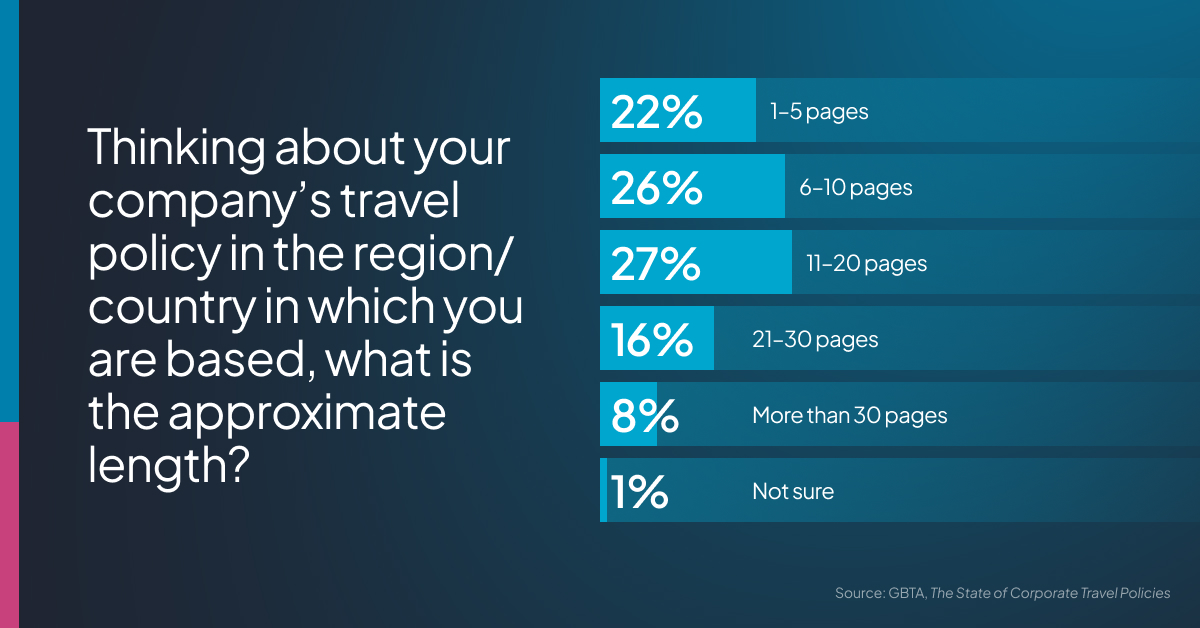
While policies are becoming stricter, they are also becoming longer. In fact, more than half of corporate travel policies now exceed 10 pages, and nearly one-quarter stretch beyond 20 pages—demonstrating the growing complexity of modern travel programs.
The additional length often reflects expanded requirements related to safety protocols, expense policies, and international travel approvals.
Yet complexity can come at a cost. According to the study, the most common reason travelers break policy is simply that they haven’t read it.
“Employees aren’t going to memorize a 20-page document,” said Del Giudice. “If travelers can’t find guidance quickly, they’ll make their own decisions based on convenience.”
For travel programs, that means simplifying how policy information is delivered—especially during the booking process.
3. Artificial intelligence could help travelers understand policies
One potential solution may lie in artificial intelligence.
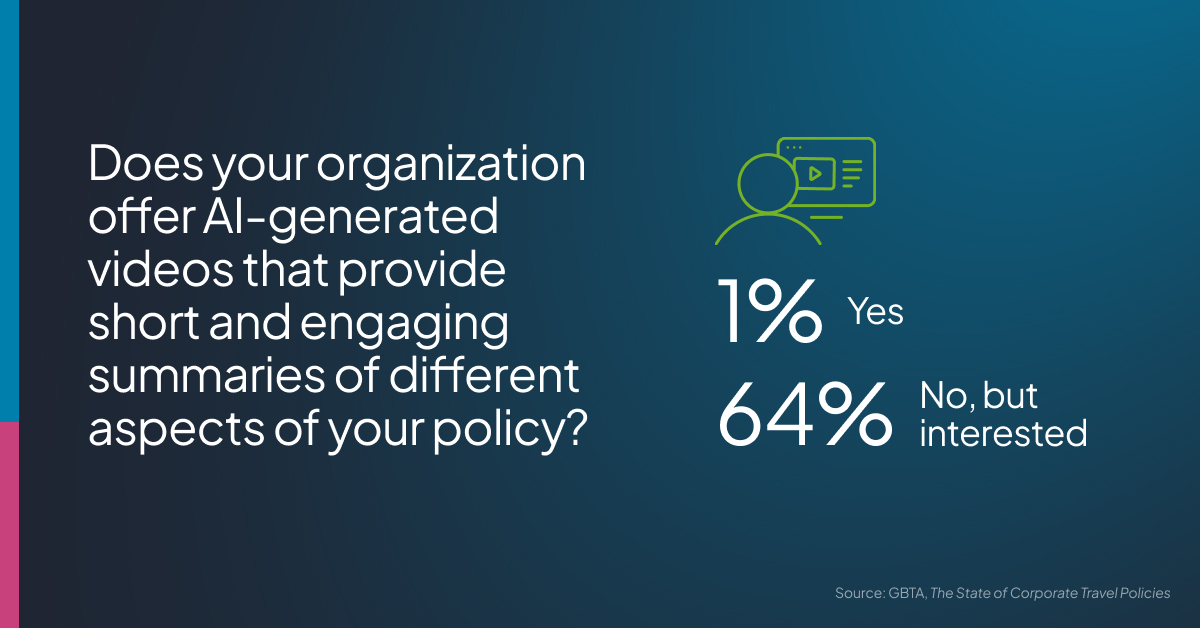
Travel managers surveyed in the study expressed strong interest in using AI to improve policy communication. Nearly two-thirds said they would be interested in AI-generated videos that summarize travel policies in short, digestible formats.
Beyond education, technology can also embed policy rules directly into booking tools—helping travelers make compliant decisions automatically.
“When policy lives inside the booking tool, travelers don’t have to think about it,” said Del Giudice. “The system guides them toward compliant choices.”
Tightening policy rules is only one part of the equation. Ensuring travelers actually follow those rules remains a separate challenge.
4. Booking compliance remains a major challenge
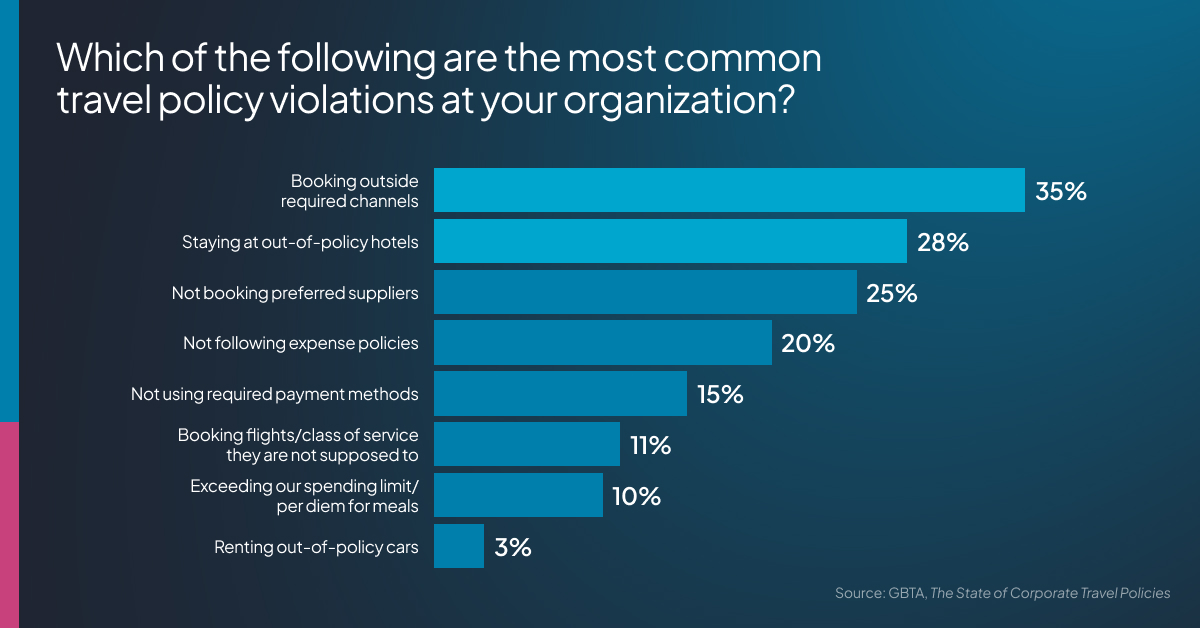
Even with modern booking tools, compliance remains one of the biggest obstacles for corporate travel programs.
Most companies require employees to book travel through managed channels such as a travel management company or an online booking tool. But fewer than half strictly enforce that requirement.
When travelers book outside the managed program, companies lose visibility into their travel activity.
“If employees book directly with airlines or hotels, the company may not know about the trip,” Del Giudice explained. “That makes it harder to track spend and support travelers during disruptions.”
5. Hotel policies are often flexible—but that can cause confusion
Hotel guidelines present another balancing act for travel managers.
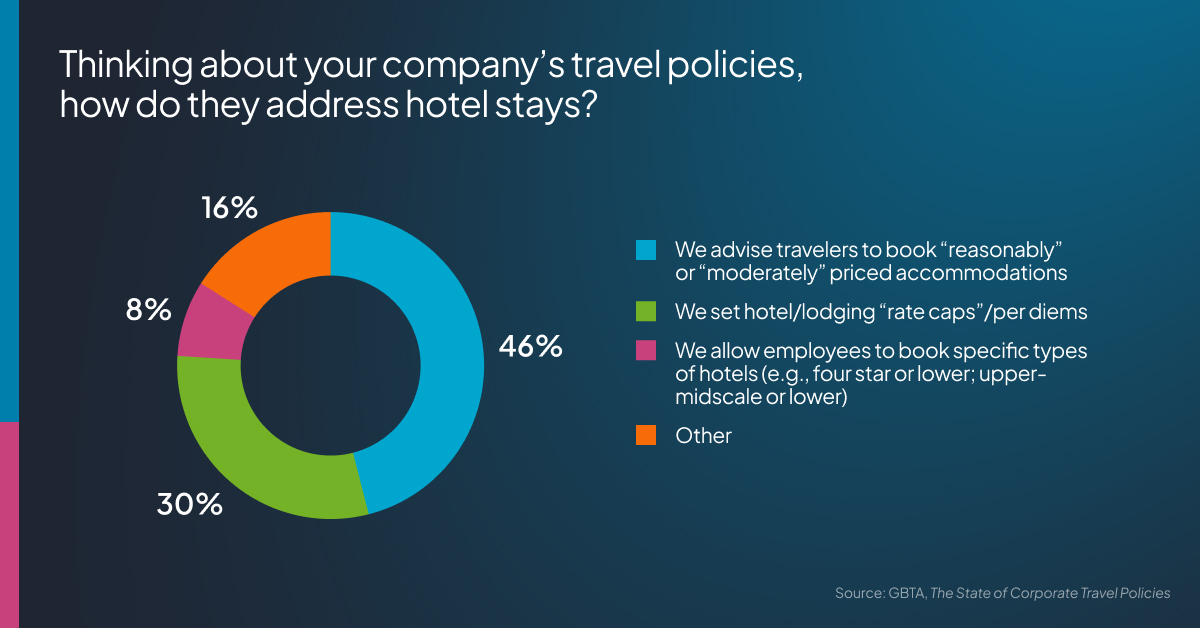
Only about 30% of companies set formal hotel rate caps or per diems. Instead, many policies advise travelers to choose “reasonable” accommodations.
While this approach provides flexibility, it can also create ambiguity.
“Travelers want options, but they also want direction,” said Del Giudice. “When preferred hotels are clearly highlighted in the booking tool, compliance improves significantly.”
Accommodation policies highlight another area where corporate travel programs are still finding their footing.
6. Homesharing remains controversial in corporate travel
The sharing economy has reshaped many parts of the travel industry—but corporate travel policies have been slower to embrace it.
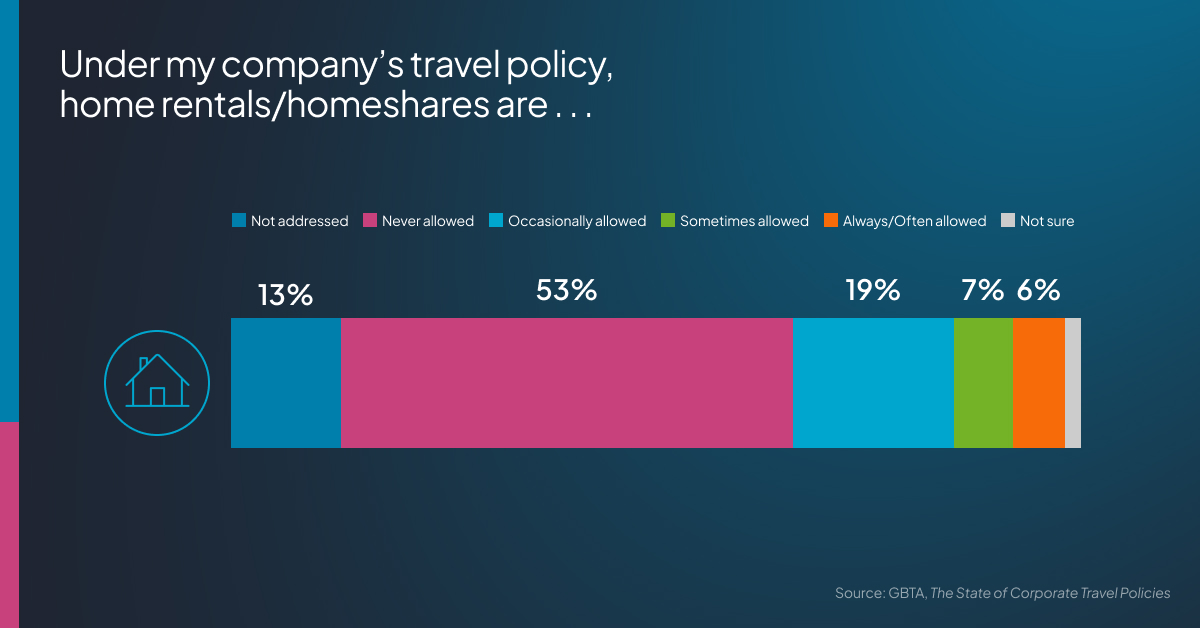
More than half of travel policies prohibit homesharing services such as Airbnb and Vrbo.
Safety, duty-of-care responsibilities, and reimbursement concerns often drive those decisions.
“Hotels operate under standardized safety, accessibility, and service standards,” Del Giudice explained. “For corporate travel programs, that level of predictability is important.”
7. Premium economy is becoming a popular compromise
Airfare policies are also evolving as companies seek a middle ground between comfort and cost.
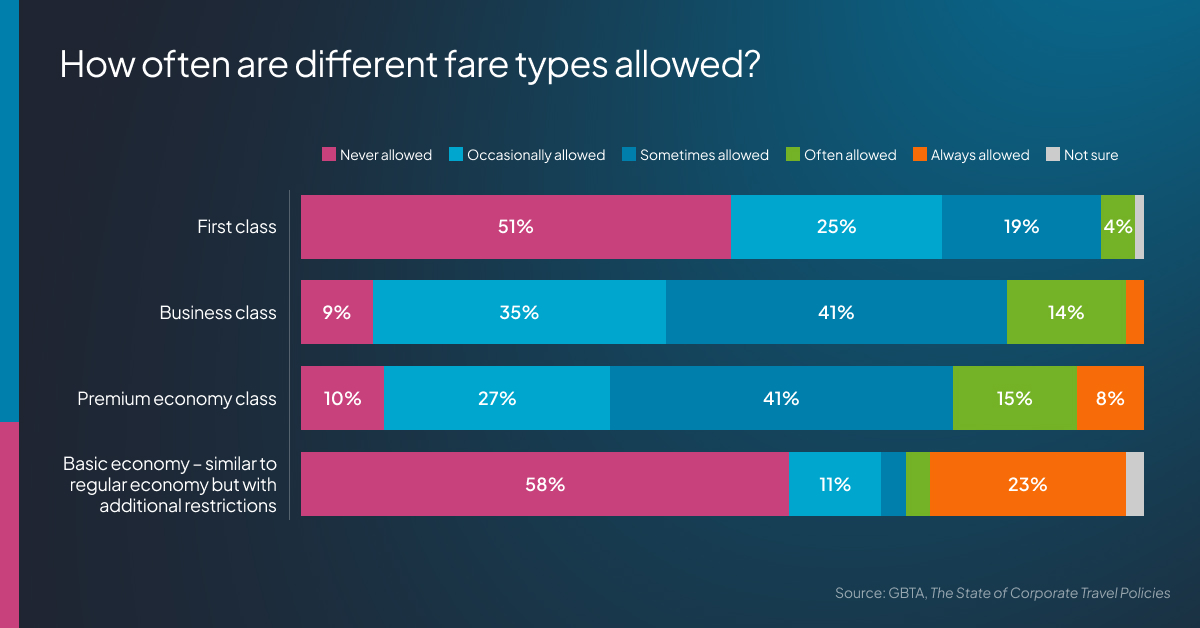
Premium economy has become a widely accepted option in many corporate travel programs.
Business class, by contrast, is typically restricted to longer flights based on duration thresholds.
“Airlines now offer multiple options of premium services that help travelers without breaking the bank,” said Del Giudice
8. Travel amenities can improve the traveler experience
Amenities may seem like small details, but they can have a meaningful impact on the traveler experience.
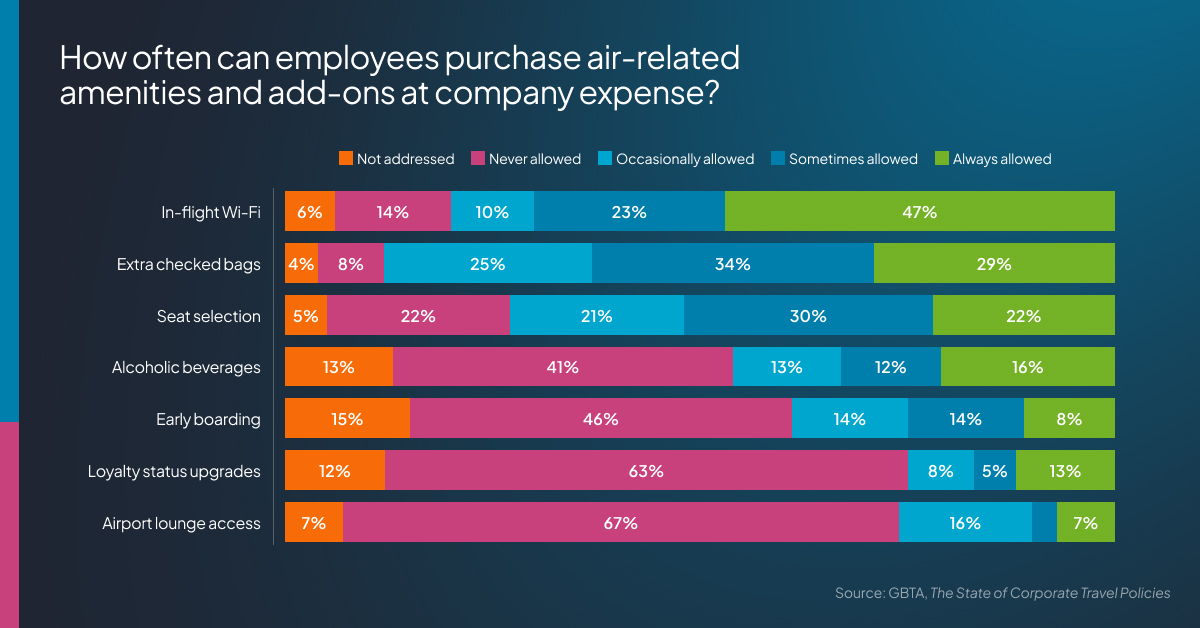
For example, about half of corporate travel policies allow travelers to select seats at company expense, and some permit services such as Wi-Fi or additional baggage.
Those small conveniences can make business travel less stressful.
“Something as simple as selecting a seat in advance can make a trip smoother,” said Del Giudice. “When travelers are more comfortable, they’re better prepared for meetings and work.”
Taken together, these trends point to a broader shift in how companies approach travel governance.
9. Accessibility and inclusion remain areas for improvement
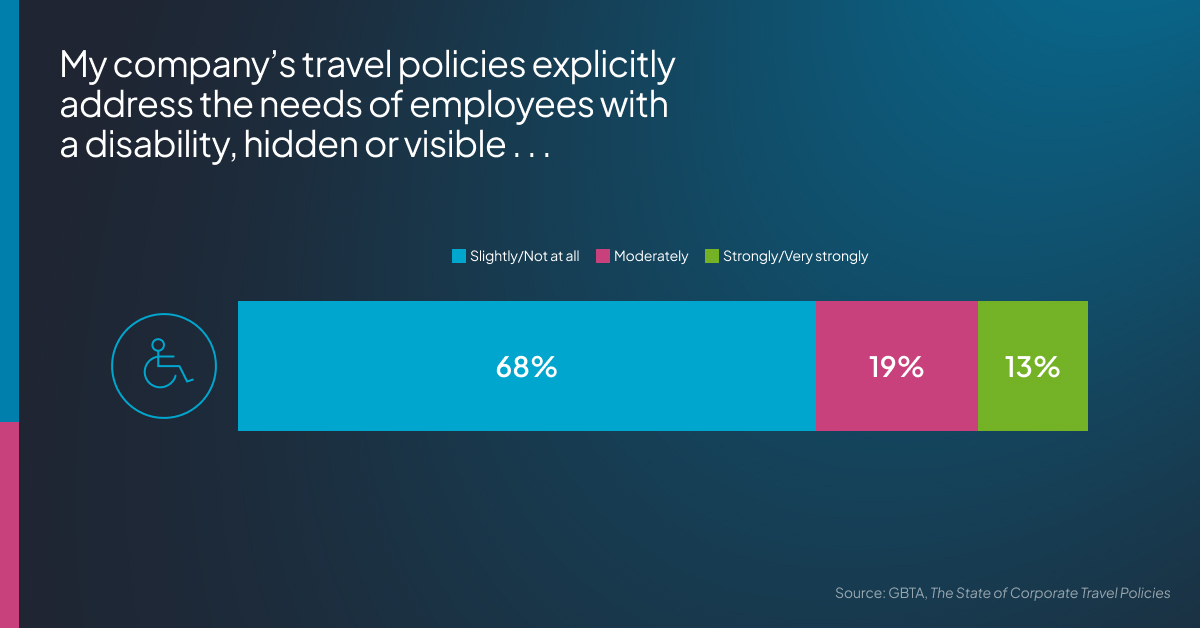
Only 13% of travel managers say their policies strongly address the needs of travelers with disabilities.
Policies also rarely include guidance on how travelers should report discrimination or request assistance. But many organizations are beginning to recognize the need for more inclusive policies.
“Companies want to make sure every employee feels supported when they travel,” said Del Giudice. “Clear processes for requesting accommodations are becoming more important.”
10. Travel policies must continue to evolve
For travel managers, the takeaway is clear: policies must continue evolving alongside the broader business travel landscape.
Technology, traveler expectations, and global risk considerations are reshaping how companies manage corporate travel. Programs that regularly review and update their policies are better positioned to keep pace with those changes.
As Del Giudice put it, “Travel policies shouldn’t stay the same for years. When companies revisit their policies regularly, they can respond to new travel realities and keep their programs running smoothly.”
When policy, technology, and traveler education align, organizations gain stronger visibility into travel activity—and ultimately greater value from every trip.