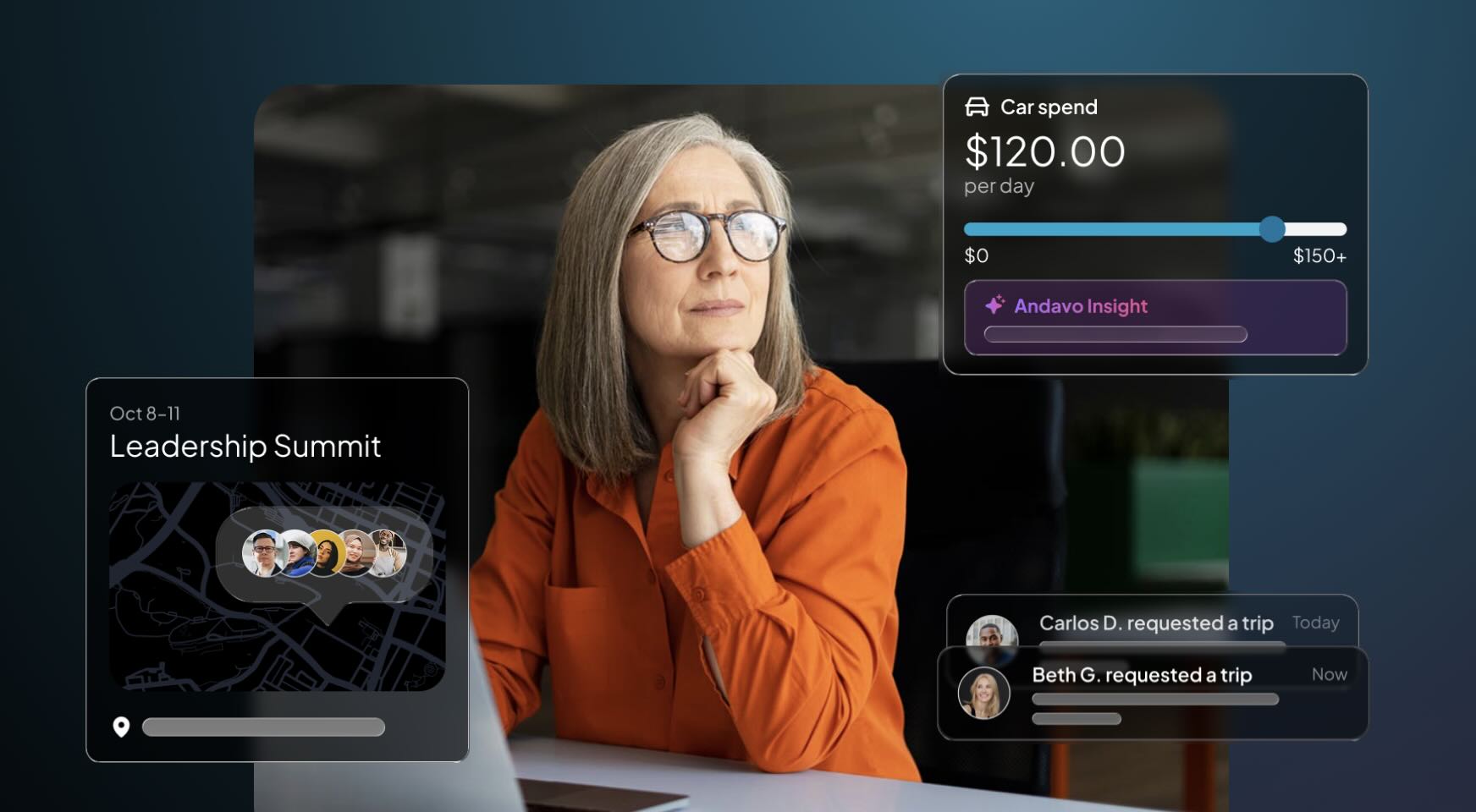
A canceled flight can leave a traveler stranded. An unused airline ticket can expire before anyone realizes it is available. A department can exceed its travel budget while the travel manager is still waiting for last month's reports.
These problems are familiar to anyone responsible for a corporate travel program. They also reveal an important limitation of software that focuses primarily on making reservations.
Travel managers need visibility into what happens before, during, and after every trip. They need reliable information to make decisions, practical tools to handle routine work, and a way to support employees when their plans change.
Corporate travel management software should make those responsibilities easier to manage. The following capabilities are worth prioritizing when evaluating a platform.
1. Travel program visibility that supports better decisions
One of the most valuable functions of corporate travel management software is bringing travel data into a view that managers can actually use.
Without reliable reporting, answering basic questions can become a research project. How much did each department spend last quarter? Which suppliers are receiving the most bookings? Are travelers using negotiated rates? How much value is sitting in unused airline tickets?
A strong reporting platform should help travel managers answer those questions without repeatedly requesting custom spreadsheets or combining data from several systems.
Look for software that provides:
- Spend reporting by department, business unit, cost center, or supplier
- Visibility into travel trends and booking activity
- Policy compliance and savings reporting
- Access to detailed transactions when further investigation is needed
- Information about unused tickets, exchanges, and other opportunities to control costs
Christopherson's Andavo reporting tools give clients self-service access to program spending, savings, compliance, and supplier performance. Managers can review overall trends and examine individual transactions to better understand the results.
That detail is especially helpful when discussing travel budgets with finance, preparing for supplier negotiations, or deciding where policy changes may be needed.
Better visibility also makes it easier to demonstrate the value of a managed travel program. Instead of relying solely on total spending, managers can examine the savings generated by negotiated rates, lower fares, rate assurance, and other program initiatives.
2. Administrative tools that reduce routine work
Travel managers rarely have the luxury of concentrating on one responsibility at a time.
A typical day may involve answering traveler questions, managing employee profiles, addressing booking problems, reviewing program spending, and coordinating with finance or HR. For organizations with multiple locations or business units, even simple changes can involve several people and systems.
Corporate travel software should reduce the time spent maintaining the program.
User management is a good example. When someone joins or leaves an organization, the travel team needs a reliable way to manage their access. The same applies when employees move between departments or require different permissions.
Andavo's program management platform includes tools for adding users, assigning roles, and managing access. It also supports organizational structures such as departments, cost centers, and business units.
That structure helps ensure travel activity is associated with the right part of the organization, supporting cleaner reporting and more consistent program administration.
Travel managers should also consider how a platform handles unused tickets. Knowing that a credit exists is useful, but tracking it over time and applying it before expiration is where the financial value comes from.
The broader question for any software provider is straightforward: How many routine tasks can the travel team manage directly, and how much manual follow-up remains?
3. Travel policy compliance built into the booking process
A corporate travel policy can establish clear expectations for spending, preferred suppliers, booking procedures, and approvals. But even a well-written policy has limited value if travelers struggle to follow it.
Employees may not remember a hotel rate limit or know which fare types are permitted. Others may book outside approved channels because finding a compliant option takes too much effort.
Corporate travel management software can address these problems by presenting policy guidance when travelers make their reservations.
Useful capabilities include showing preferred suppliers, identifying bookings that fall outside policy, and applying rules that reflect different employee groups or travel requirements.
The Andavo Policy Engine is designed to incorporate travel policy into the booking experience. Its tools allow administrators to create rules, apply them to specific groups, and evaluate changes against booking history.
For example, a company might establish different hotel spending limits for major cities, restrict premium-cabin travel based on flight duration, or require approval for certain exceptions.
When those requirements are visible during booking, employees have a better chance of selecting appropriate options before costs are incurred.
Travel managers also gain an opportunity to review policy effectiveness. If exceptions repeatedly occur on a particular route or in a certain destination, that pattern may point to a policy that needs adjustment rather than a traveler behavior problem.
4. Traveler visibility and support when plans change
Travel managers are responsible for more than controlling spending. They also need to know which employees may be affected when a disruption occurs.
A severe storm, airport closure, or security incident can quickly turn a routine business trip into a situation requiring coordinated support.
The first challenge is often identifying the travelers involved. If itineraries are scattered across booking systems, confirmation emails, and individual inboxes, locating affected employees takes additional time.
Corporate travel software should provide itinerary-based visibility into where employees are scheduled to travel, including trips already underway and upcoming departures.
Andavo's risk management tools bring traveler itineraries and relevant risk alerts into a central view. Travel managers can identify people whose booked travel may intersect with an incident and review their trip details to coordinate a response.
This visibility is based on travel itineraries rather than GPS tracking of employees' physical locations. That distinction is important when evaluating duty-of-care technology.
Support for travelers is equally important.
When a flight is canceled or a reservation needs to change, employees need a practical way to reach someone who can help. A travel management platform should make that assistance easy to access without forcing the employee to start from scratch.
Christopherson provides 24/7 travel advisor support through phone, chat, text, and email. Advisors can access relevant trip details and company travel policy, helping them respond with the context needed to resolve a problem.
For travel managers, that connection between technology and human service can reduce the need to personally intervene every time an employee experiences a disruption.
5. Corporate booking tools that encourage adoption
Booking remains an essential part of corporate travel software. If employees find the booking experience confusing or restrictive, they may turn to consumer travel websites or make reservations outside the managed program.
That creates additional challenges for spending visibility, policy compliance, and traveler support.
A good corporate booking tool should help employees compare practical travel options while keeping company requirements in view.
The experience should include access to relevant flight, hotel, and rental car choices, preferred suppliers, negotiated rates, and traveler preferences.
Andavo Booking brings flight, hotel, and rental car shopping into a connected booking experience, with policy information and traveler preferences incorporated into the results.
The accompanying Andavo Traveler app gives employees access to itineraries, profile information, notifications, and advisor support while traveling.
These capabilities benefit travel managers when employees use them consistently. Higher adoption of approved booking channels means more reservations can be captured within the managed program, where spending and traveler information are easier to review.
When evaluating corporate travel software, ask how the booking experience works for both travelers and arrangers. Convenience should extend beyond the initial reservation to the changes and support requests that often follow.
6. Payment and reconciliation tools that connect travel to finance
The administrative work associated with business travel continues long after a reservation is confirmed.
Payments must be processed, charges matched to trips, receipts collected, and transactions reconciled. When the relevant information sits in separate systems, finance and travel teams may spend considerable time investigating charges or correcting records.
Travel management platforms can help by connecting payment details with booking and traveler information.
Andavo Payments offers single-use virtual cards with controls tied to a merchant, spending amount, and time window. This gives organizations a way to manage certain travel payments without distributing a traditional corporate card for every transaction.
Andavo Expense Reconciliation addresses another part of the process by matching bank statement transactions with available travel information, including the traveler, trip, and cost center. The resulting data can be exported for use in an organization's existing expense or ERP system.
These tools may be especially valuable for companies managing frequent hotel stays, centralized payments, or complicated cost allocations.
For travel managers, the benefit is a clearer connection between booked travel and the expenses that follow. For finance teams, it can mean fewer unidentified transactions and less manual matching.
Organizations should evaluate payment and reconciliation capabilities alongside their existing banking, expense, and accounting processes to understand how the systems will work together.
7. Integrations that keep travel data connected
Most companies already rely on several systems to manage employee information and spending.
HR platforms maintain personnel records. Finance teams use expense and accounting software. Procurement may have separate reporting requirements. Travel managers need dependable information that fits within those established workflows.
Software that requires teams to enter the same information multiple times can create more work than it removes.
When comparing corporate travel management platforms, ask which integrations are supported and how data moves between systems. Pay particular attention to employee records, cost centers, travel transactions, and reporting requirements.
Andavo provides APIs and integration tools that allow organizations to access travel data and connect it with other business applications, including HR and ERP systems.
The practical value depends on each company's technology environment. An integration should solve a specific problem, such as reducing duplicate entry or making approved travel data available for financial reporting.
Choosing the right corporate travel management software
No two travel programs have exactly the same requirements.
A company with a small group of frequent travelers may place the greatest importance on booking convenience and reliable support. A multinational organization with several business units may need more sophisticated reporting, administrative controls, and traveler visibility.
Before choosing a platform, travel managers should identify where their current processes create the most work.
Consider these questions:
- Can we see travel spending and activity across our organization without collecting data manually?
- How easily can we maintain traveler information and manage employee access?
- Does our booking process help employees follow company travel policy?
- Can we identify travelers who may be affected by a disruption and get them assistance?
- How well does travel data connect with our payment, expense, and reporting systems?
- What support will we receive when the software or our travel program needs attention?
The answers can help distinguish features that look impressive in a demonstration from those that will make a measurable difference in day-to-day operations.
One platform for corporate travel management
Andavo brings together the technology, data, and personal service companies need to manage business travel. Developed by Christopherson, the platform connects booking, reporting, policy management, traveler visibility, payments, and advisor support throughout the travel experience.
That integration is especially valuable when plans change. Travelers can access assistance from experienced travel advisors who have the context of their trip and company travel policy, while travel managers maintain visibility into the broader program. The same connected experience supports everyday tasks, from managing employee access and reviewing spending to responding to disruptions.
With Andavo, travel managers have a single platform for overseeing their programs, supporting employees, and making informed decisions without navigating disconnected systems or coordinating between separate technology and service providers.
Explore Andavo to see how it can support your organization's business travel needs.
► You’ll also like: AI in corporate travel: Evaluating security, service, and results
Frequently asked questions
What is corporate travel management software?
Corporate travel management software helps organizations manage business travel through tools for booking, policy compliance, traveler information, reporting, and program administration. More comprehensive platforms may also include risk management, payments, reconciliation, and integrations with other business systems.
What is the difference between corporate travel booking software and travel management software?
Corporate travel booking software focuses on searching for and reserving flights, hotels, rental cars, and other travel services. Travel management software has a broader role, helping organizations oversee travel policies, spending, employee activity, reporting, and the processes surrounding each trip.
Can corporate travel management software help reduce travel costs?
Yes. It can help organizations identify spending trends, guide travelers toward approved rates and suppliers, track unused ticket value, and evaluate savings opportunities. Actual savings depend on travel volume, supplier agreements, program adoption, and how the organization uses the available data.