Business travel involves much more than booking a flight or reserving a hotel. Every trip comes with company policies, budgets, employee needs, payment requirements, and the possibility that plans will change.
For organizations managing frequent business travel, those responsibilities add up quickly. Employees need a convenient way to make reservations. Travel managers need to oversee spending and keep policies current. Finance teams need accurate transaction data. And when something goes wrong, travelers need assistance without delay.
The challenge becomes greater when information is scattered across booking tools, spreadsheets, expense systems, and email conversations.
Corporate travel management software can bring these activities into one connected environment, helping businesses manage travel more consistently while reducing the manual work involved.
The challenges of managing business travel
Even a relatively straightforward travel program can create complications when its processes are disconnected.
Consider what happens when an employee books a business trip. The reservation needs to comply with company policy, reflect the correct department or cost center, and use an appropriate payment method. The traveler needs access to the itinerary and assistance if plans change. After the trip, finance needs to identify and reconcile the charges.
When those steps involve different systems, employees may need to enter the same information multiple times. Travel managers can struggle to get a complete picture of travel activity, and finance teams may spend hours matching transactions with reservations.
Other common challenges include:
- Limited spending visibility: Travel data is spread across different systems, making it difficult to track budgets or identify savings opportunities.
- Inconsistent policy compliance: Employees may be unsure which travel options are approved or may book outside company guidelines.
- Time-consuming administration: Travel managers spend too much time maintaining profiles, gathering information, and responding to routine requests.
- Traveler disruptions: Flight cancellations, weather events, and other problems require timely information and assistance.
- Complicated expense processes: Missing receipts, unidentified charges, and inconsistent transaction data create additional work after each trip.
A corporate travel management platform can address these challenges by connecting the information, workflows, and support involved in managing business travel.
6 benefits of corporate travel management software
1. Reduce administrative work and improve efficiency
One of the most immediate benefits of corporate travel management software is the ability to simplify everyday tasks.
Without a centralized system, travel managers may need to update employee information in several places, manually compile reports, and track down reservation details. These tasks become particularly difficult for companies with multiple departments or locations.
A connected platform gives administrators a central place to manage travel-related activity.
For example, Andavo's travel management tools allow companies to manage traveler access, assign roles, and organize travel data around their existing departments, cost centers, and business units.
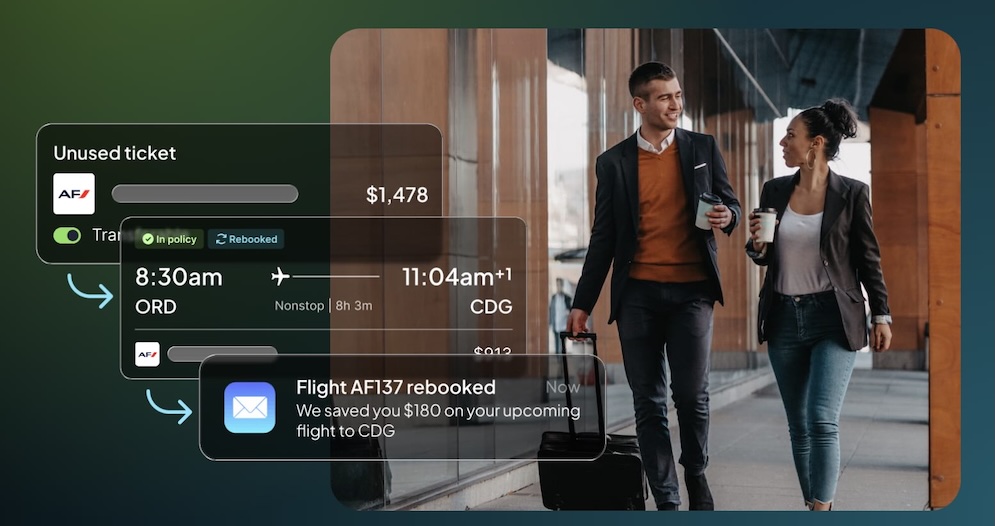
Travel managers can also review itineraries and unused airline tickets from a central administrative view.
These capabilities reduce the need to switch between systems or repeatedly request information from other teams. They can also help companies establish more consistent procedures as their travel programs grow.
Employees benefit from simpler processes, too.
Andavo Booking allows travelers to search for flights, hotels, and rental cars in an environment that incorporates their preferences and company travel requirements. The Andavo Traveler app provides access to itineraries, trip notifications, profile information, and advisor support while traveling.
When essential trip information is easier to find, employees can spend less time managing the logistics of business travel.
2. Gain better visibility into travel spending
For many organizations, travel is a significant business expense. Managing that investment requires more than knowing the total amount spent.
Business leaders need to understand where the money goes, how spending changes over time, and whether the company is receiving value from its supplier agreements and travel policies.
Corporate travel management software can provide that information through centralized reporting.
With Andavo's reporting capabilities, travel managers and finance teams can review spending, savings, policy compliance, and supplier performance. Self-service dashboards also provide transaction-level detail when a team needs to investigate an expense or understand a particular spending pattern.
This information can help organizations answer questions such as:
- Which departments account for the most travel spending?
- Are employees booking with preferred suppliers?
- Where are travel costs increasing?
- How much is the organization saving through its managed travel program?
Having access to consistent reporting makes budget discussions more productive and helps identify areas where travel policies or supplier arrangements may need attention.
3. Control costs and improve policy compliance
Travel management software can also help companies make better spending decisions before reservations are confirmed.
A written travel policy is an important starting point, but employees still need to apply its rules when comparing flights, hotels, and rental cars.
Without guidance at the point of booking, travelers may select options that exceed company limits or overlook preferred suppliers.
Andavo's Policy Engine incorporates company travel rules into the booking process, helping employees identify appropriate options as they shop.
Administrators can establish policies for different travel requirements and employee groups, including rules related to hotel rates, cabin classes, and approvals. The platform also allows teams to examine proposed policy changes against booking history.
This gives organizations a more practical way to manage compliance while providing travelers with clearer expectations.
Cost control extends beyond the initial booking.
Unused airline tickets, missed savings opportunities, and inconsistent supplier usage can affect a travel budget long after the reservation is made. Centralized visibility into those areas helps travel managers identify opportunities to recover value and improve future purchasing decisions.
For finance leaders, the advantage is greater consistency in how travel expenses are authorized and monitored.
4. Support travelers before, during, and after their trips
A booking confirmation is only one part of a successful business trip.
Employees may need help changing a reservation, resolving a hotel problem, or finding another flight after a cancellation. During a significant disruption, the organization may also need to identify which travelers are affected and coordinate a response.
Corporate travel management software should make that process easier for both travelers and the people responsible for their safety.
Andavo's risk management capabilities provide itinerary-based visibility into employees' travel plans. When a weather event, security incident, or other disruption affects a destination, administrators can identify travelers scheduled to be in the area and review their itineraries.
The platform also incorporates relevant risk alerts to help teams assess potential disruptions. This visibility is based on booked travel plans rather than tracking employees' physical movements.
Just as important, traveler assistance is integrated into the Andavo experience.
Through Andavo's 24/7 traveler support, employees can connect with experienced Christopherson travel advisors who have access to relevant reservation information and company policy. Travelers can request assistance through channels including chat and phone, while the connected platform provides context that helps advisors address their needs.
This integrated approach reduces the burden on internal travel managers while giving employees access to assistance when they need it.
5. Simplify travel payments and expense reconciliation
Booking a trip is often the easiest part of accounting for its costs.
Finance teams must still verify transactions, match payments with the correct traveler and trip, allocate expenses, and resolve discrepancies.
When payment information and reservation data are disconnected, reconciliation can become a time-consuming monthly process.
Corporate travel management software can help by linking travel activity with the financial records associated with each trip.
Andavo Payments supports single-use virtual cards for travel bookings. Cards can be restricted by merchant, amount, and date range, giving companies greater control over how payments are made.
Payment support is also part of the platform experience. For hotel bookings, Andavo includes assistance with virtual card acceptance, pre-check-in confirmation, and folio retrieval, helping address payment problems that might otherwise fall to the traveler or finance team.
Andavo Expense Reconciliation helps connect bank statement transactions with available travel information, including the traveler, trip, and cost center. Matched records can then be exported for use in an organization's existing expense or ERP system.
For businesses handling substantial travel volume, better connections between booking and financial data can reduce manual matching, help identify discrepancies, and improve the accuracy of expense records.
6. Connect travel management with existing business systems
Introducing new software can create problems if it does not work well with the systems a company already uses.
Employee information may originate in an HR platform, while expenses are managed in accounting software. Finance teams may also rely on separate tools for financial planning, budgeting, and reporting.
Corporate travel management software should fit into those established processes.
Andavo's APIs and integrations provide ways to connect travel information with other business applications, including HR, finance, expense, and reporting systems.
These connections can help reduce duplicate data entry and make relevant travel information available to teams outside the travel department.
When evaluating a platform, companies should review their existing technology environment and identify which integrations would provide the greatest operational benefit.
How to choose corporate travel management software for your business
The right software depends on how your organization manages travel today and where its processes need improvement.
A smaller company may prioritize straightforward booking, accessible traveler assistance, and basic spending visibility. A larger organization may require more detailed reporting, multiple policy structures, stronger administrative controls, and integrations with established financial systems.
Before selecting a platform, consider the following questions:
- Where does our team spend the most time? Identify repetitive tasks that could be simplified through centralized information or automation.
- Do we have a reliable view of travel spending? Determine whether existing reports provide the detail needed for budgeting and supplier decisions.
- How easily can employees follow our travel policy? Consider whether approved choices and requirements are clear during booking.
- What happens when a traveler needs help? Evaluate the accessibility of support, the information available to advisors, and the tools for managing disruptions.
- How does travel data reach our finance systems? Review the processes for payments, expense reconciliation, and data integration.
A software demonstration should show how these activities work together, including what happens when a reservation changes or an exception requires attention.
Bring your business travel together with Andavo
Christopherson developed Andavo to give organizations a connected platform for managing the full travel experience.
Andavo brings booking, travel management, policy compliance, reporting, payments, risk management, and personal advisor support into a shared environment. The integration helps employees manage their trips, gives administrators greater visibility and control, and provides finance teams with more useful travel data.
Because service is built into the platform experience, travelers can move from managing a reservation to getting assistance without losing the context of their trip. Travel managers can oversee everyday activity while maintaining access to the information and support needed when circumstances change.
For organizations looking to reduce administrative work and improve the way business travel is managed, Andavo provides a more connected approach.
Explore the Andavo platform to see how it can support your business travel program.
► You’ll also like: The corporate travel software travel managers need